


For years, Calgary Housing’s approach to maintenance created challenges across the organization, including rising repair costs from an over-reliance on contractors and recurring building failures, to ongoing negative impacts on residents living in aging properties.
Residents were deeply affected. Some had frequent heating outages, impacting quality of life year-round. Many lived in chronic uncertainty, not knowing when the heat would come back on.
And the emergency repairs were costing the organization dearly, only to have the same issues crop up again and again.
“There was a contractor that told me that one of our residences was like a second home to them, and I went to my team and asked, ‘How do we change this?’” says Bo Jiang, former VP, Asset Management and Development.
Four years ago, the teams put their heads together to revamp how Calgary Housing (CH) could better maintain its buildings, improve its finances, and invest in its people. The result was innovation that is now woven into the very fabric of the CH culture.
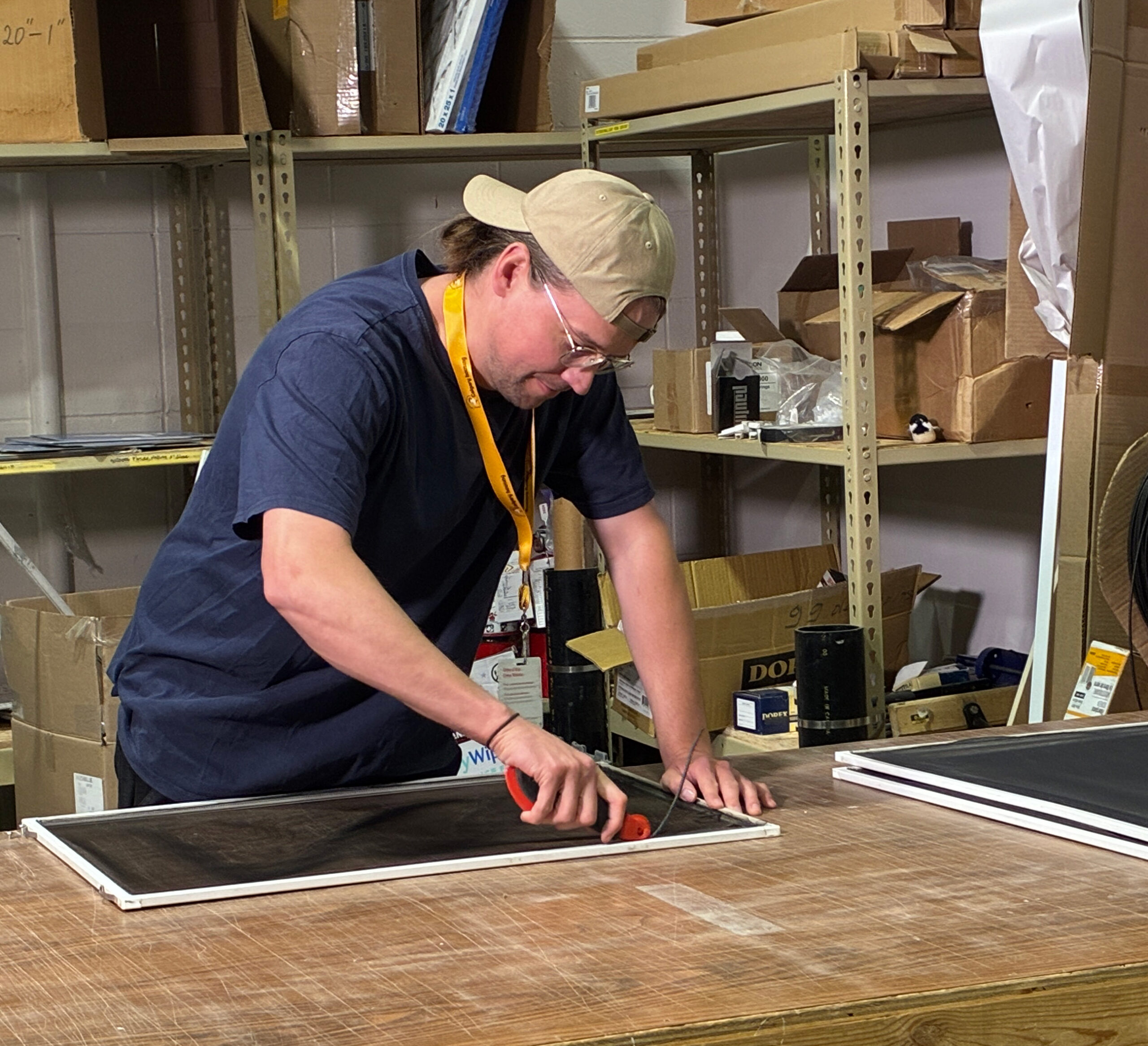

The CH teams made two important changes that led to massive results: expanding in-house expertise and ensuring all the allotted capital budget was used to improve aging homes.
Building an internal team of experts meant CH could identify the root causes, not just fix the symptoms. That expertise is leveraged by the organization to save money by carefully evaluating every quote that comes in from a vendor.
“We now have experts on our staff. We know how to pinpoint issues,” says David Fox, Plumbing Foreman at CH, adding he feels his team has made a difference.
The numbers reflect the change. CH saves approximately $150,000 per technical service worker hired, as a conservative estimate. In 2025, the organization saved $2.5 million in contractor fees alone.
“Calgary Housing is a place where I feel like I can actually make a meaningful difference with all the years of experience and qualifications I have,” says Kyle Baker, Plumber at CH.
But it’s more than just expanding the service department and hiring more tradespeople. CH began nurturing a culture of innovation and trust by calling on its maintenance team to be an integral part of its project planning, bringing their on-the-ground expertise to the decision–making table.
The numbers reflect the change. CH saves approximately $150,000 per technical service worker hired, as a conservative estimate. In 2025, the organization saved $2.5 million in contractor fees alone.
“We triage internally,” explains Len Van As, Technical Service Coordinator at CH.
The team determines what equipment needs immediate attention, carefully weighing safety, condition, lifecycle value, and cost efficiency, all while keeping the resident experience front and centre.
“As blue-collar trades — especially as front-line workers — we don’t usually get a voice. We don’t get a lot of time to give our opinions,” Baker states.
The second change involved more effective application of capital funding. Unless money is in place to execute, good ideas may simply remain trapped on the page. A restructured approach to capital budgeting freed many ideas proposed by team members and allowed their implementation.
Today, CH consistently spends 100 per cent of its allocated capital funding, up from 30 to 35 per cent. Every dollar available goes to improving the quality, comfort, and reliability of residents’ homes. In capital spending management, across all levels of government, this is a relatively rare achievement.
Under CH’s new procedure, unused contingency funds from one project can be quickly reallocated to other purposes, allowing CH to reinvest immediately in improvements and expanded maintenance.
With this approach in place, staff maintain formal and informal lists of ready-to-go projects and obtain quotes in advance, so work can begin immediately when funds become available, typically toward the end of the calendar year.
“We all put forward our ideas of what we think is the largest issue,” Baker says.
Once the projects are prioritized, CH works closely with vendors to ensure that they have the capacity to meet the short turnaround times. The organization also spreads the jobs across vendors – most of which are local small businesses – so that no contractor is overloaded.
“Staff take pride in being able to do work that is beyond just fixing something that is broken,” says Hugh MacDiarmid, Building Maintenance Service Coordinator at CH.
It hasn’t always been this smooth. When the organization started this new strategy, it was a bit of a panic to get the work done and line up contractors. Now, it’s anticipated and the team plans for it throughout the year.
“It’s a more refined process at this point,” says MacDiarmid.
The changes also mean CH’s maintenance team can make smaller updates that make a meaningful difference, like updating a long-term resident’s kitchen or repainting a well-cared-for home. These investments allow CH to recognize and support residents who have treated their homes with care.
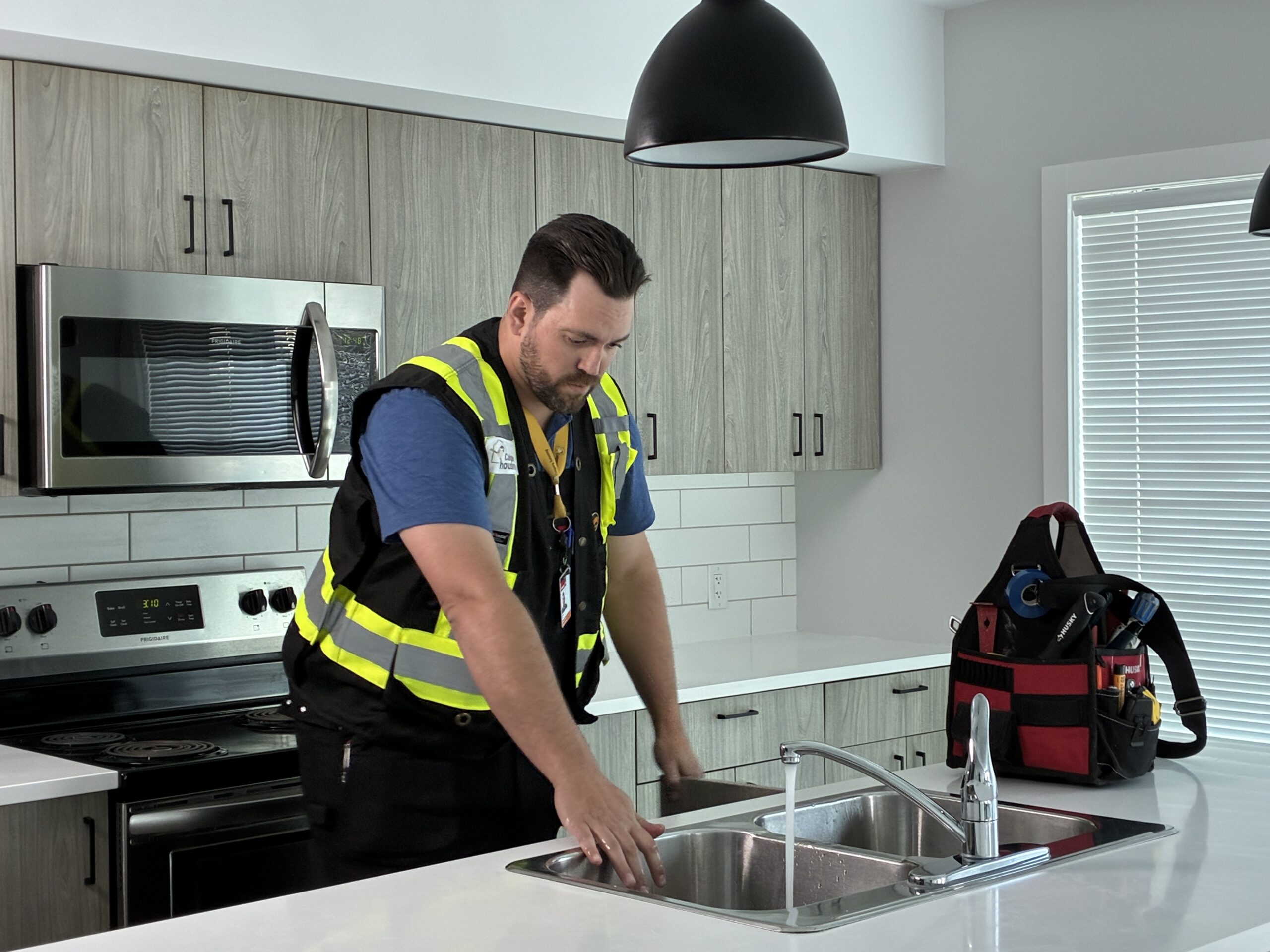
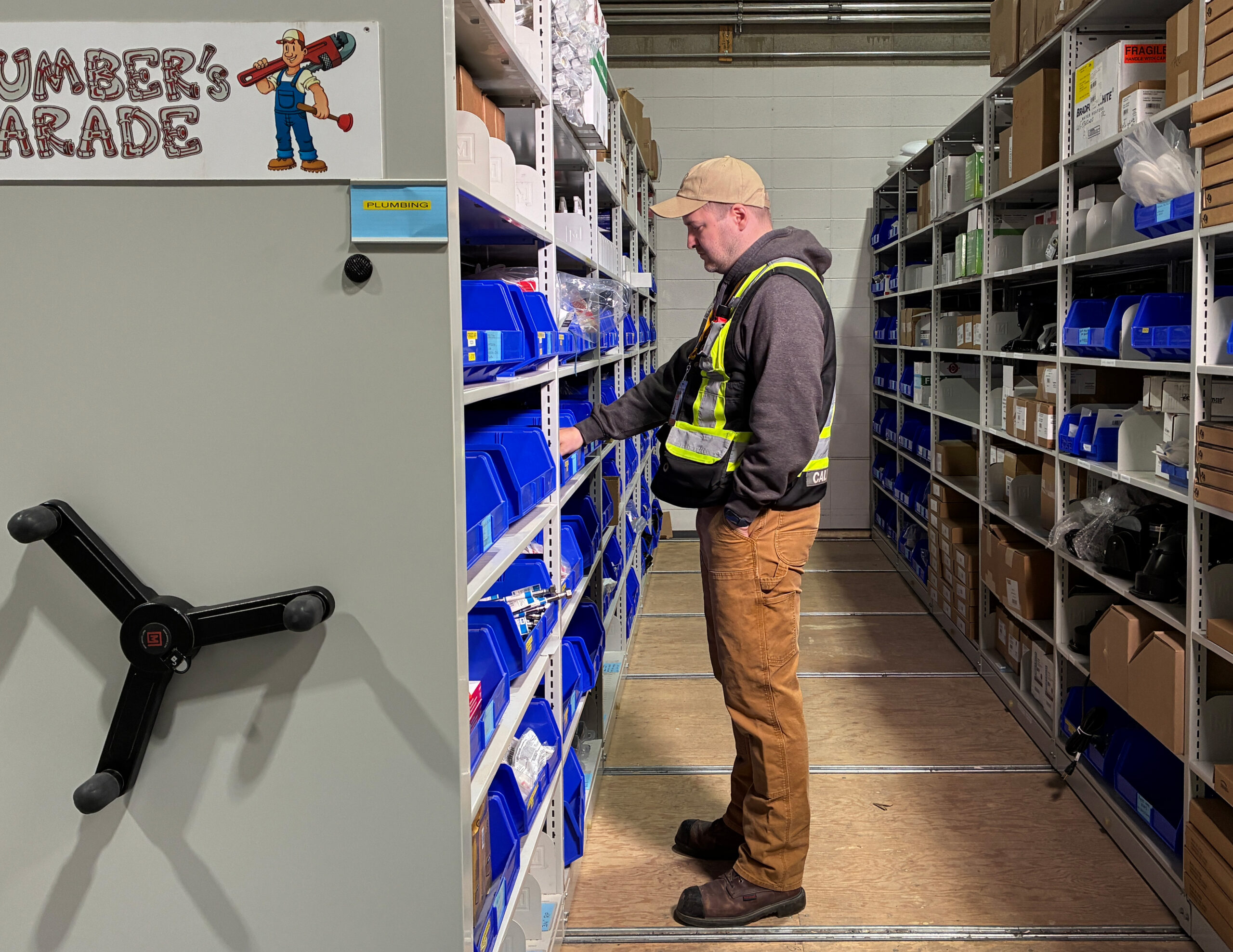
A major win for the CH Maintenance and Asset Management department was the completion of a major systems upgrade to resolve a problem that had been plaguing a large high-rise property.
Calgary Housing operates numerous buildings with central boiler plants that can serve hundreds of residents. These systems were built in a different era, maintained to minimum requirements, and became chronically unreliable.
This can lead to frequent system disruptions that have a significant negative impact on residents.
In 2025, the service team at Calgary Housing rolled out a hydronic system upgrade pilot program for one residence with four goals: improving reliability, lowering operating and maintenance costs, reducing risk of flood and asset damage, and prioritizing resident comfort in their own homes.
One of the main culprits of the system failure was buildup of magnetite, or “black sludge.”
“The sludge goes through the system, it wrecks zone valves, it causes lack of heat in homes, it creates additional service calls,” Fox explains. “It’s basically the kryptonite to a boiler heating system.”
The impact was immediate. Heat-related service calls dropped significantly compared to previous years. The initiative’s success prompted CH to begin rolling out the upgrades across all applicable buildings.
The sludge in the system was costing the organization a lot of money. The average cost of a boiler is $40,000, and CH was replacing them frequently.
The service team figured out how to clean out the system, installed filtration, then replaced the outdated zone valves for the hydronic heating system. The new replacement zone valves are cost effective, easier to repair and install, and have a lot of benefits compared to the older valves.
The impact was immediate. Heat-related service calls dropped significantly compared to previous years. The initiative’s success prompted CH to begin rolling out the upgrades across all applicable buildings.

Stability replaces crisis
CH’s approach to asset management, supported by internal expertise and capital readiness, has been transformative. What was once crisis-driven is now stable, proactive, and resident-centered, woven in the organization’s everyday culture.
“That’s just how we do business,” says Van As.
And the results speak for themselves. Calgary Housing is responsible for asset management for both City-owned homes and homes the organization owns directly and, despite an average age of nearly 50 years, 84 per cent of the homes are rated as being in good or very good condition.
Calgary Housing
Wood Centre
200, 2535 3rd Avenue SE
Calgary, Alberta
T2A 7W5